Fuel expense reimbursement works best when the process is simple and repeatable. Employees need clear receipt requirements, and finance teams need documentation they can review quickly. A strong reimbursement process usually comes down to policy, proof, and consistent formatting.
Documents usually required
- Fuel receipt or charging bill
- Expense sheet or reimbursement form
- Travel dates or trip log if required by policy
- Manager approval for higher-value claims
How companies review fuel claims
Most organisations review the date range, amount, frequency, and employee role. For example, a sales employee or field engineer may have recurring weekly fuel claims, while an office-only role may have only occasional local travel reimbursement.
Best practices for employees
- Submit receipts in chronological order
- Use one naming system for photos or PDFs
- Do not wait until the end of the quarter to organise bills
- Check whether your policy covers petrol, diesel, CNG, and EV charging separately
Best practices for employers
Employers should define monthly limits, approved vehicle use, acceptable receipt formats, and timelines for submission. A short policy avoids confusion and reduces inconsistent claim handling across departments.
Need a clean supporting receipt for your reimbursement workflow? Generate one quickly.
Open Fuel Bill Generator →Why format consistency matters
Consistent receipt formatting speeds up review, especially when a company handles many claims every month. It also makes audits, ledger checks, and management reporting easier because the same core data points appear on every submission.
Frequently Asked Questions
What is the first document needed for fuel reimbursement?
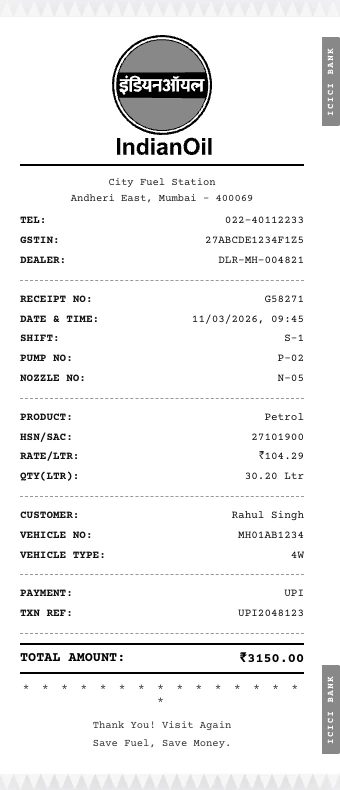
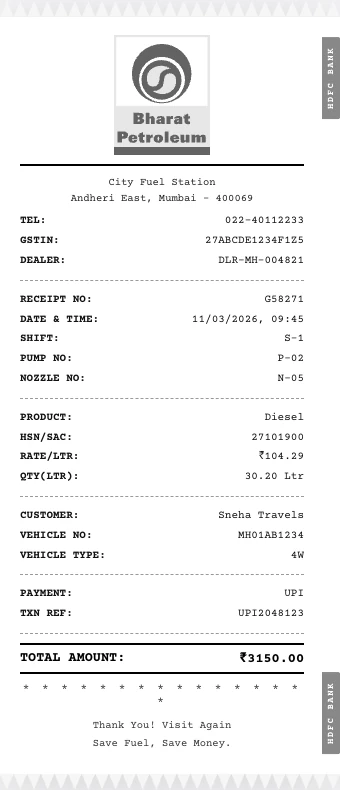
The first requirement is usually a readable fuel receipt or charging bill that shows date, quantity, unit rate, and total amount.
Should fuel receipts be submitted monthly?
In many companies, yes. Monthly submission is common because it matches payroll or accounting cycles.
Can EV charging bills be part of fuel reimbursement?
Yes. Many modern policies treat EV charging as a travel energy expense, provided the bill shows kWh usage, tariff, and total cost.