This GST invoice format for services guide explains SAC code, place of supply, billing details, and tax structure for service providers. This search intent usually comes from freelancers, accountants, and Indian businesses who are not looking for theory alone. They want a document that works in an actual Indian workflow where the invoice must satisfy both client accounts teams and GST record-keeping.
How service invoices differ from goods invoices
Service-invoice searches usually come from consultants, agencies, and freelancers rather than product sellers. Service formats matter because description quality and place of supply often carry more weight than quantity lines. Compared with goods invoices, service invoices rely more heavily on description and place of supply.
What the document should make obvious in the first few seconds
Client accounts teams usually review GSTIN, invoice date, tax treatment, and the final total before anything else. That is why the strongest versions of GST Invoice Format for Services in India front-load the most useful information instead of hiding it in dense formatting.
- Supplier and buyer details
- GSTIN and invoice number
- Description, HSN or SAC, and taxable value
- Tax breakup
- Total amount and invoice date
How this page differs from a generic template
A generic template tells you where to place text. A stronger page for this keyword explains why certain fields matter, what the reviewer is likely to scan first, and how the final document will be used in client billing and GST documentation. That extra context is what makes the format more practical, not just more polished.
For example, a service invoice raised from Karnataka to Maharashtra should mention the place of supply correctly and usually apply IGST instead of a local CGST-SGST split.
Where users usually go wrong with this variation
The usual problem is reusing a goods-style invoice that emphasizes quantity but not service description or SAC logic. In many cases the problem is not the file type itself. The problem is that the format stops short of becoming review-ready. A document can be editable, downloadable, or printable and still be weak if the names, dates, period, totals, or identifiers are unclear.
How to make the final output more review-ready
- Set the correct names, period, and identifying details before worrying about design.
- Keep numeric fields readable and easy to cross-check at a glance.
- Export or print the final version only after the working draft is complete.
- Match the output to the real workflow: HR, tax, reimbursement, client billing, or record-keeping.
Create a cleaner GST document online and export a version that is easier to review, print, and store.
Open GST Invoice Generator →Why this keyword still has search demand
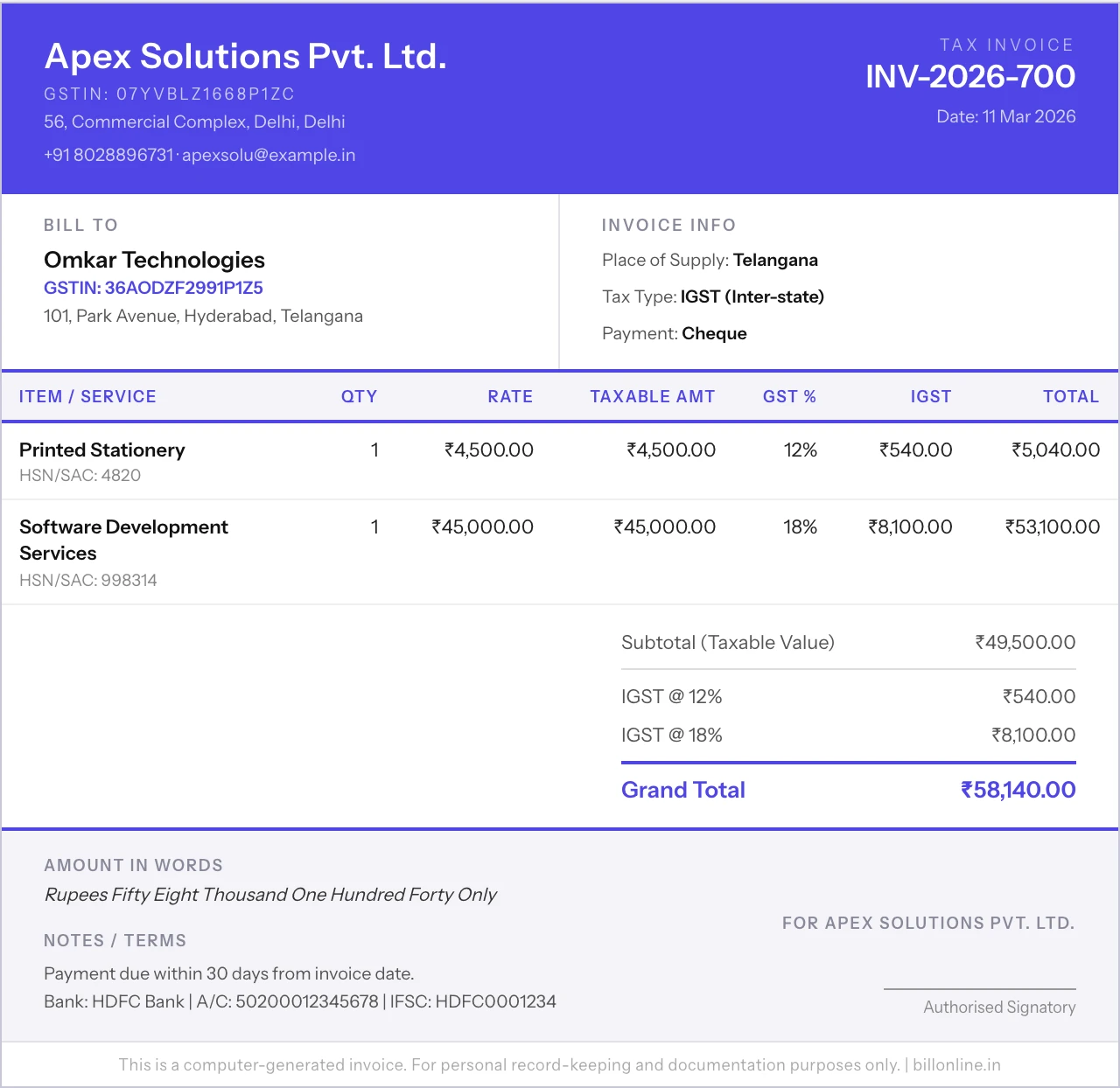
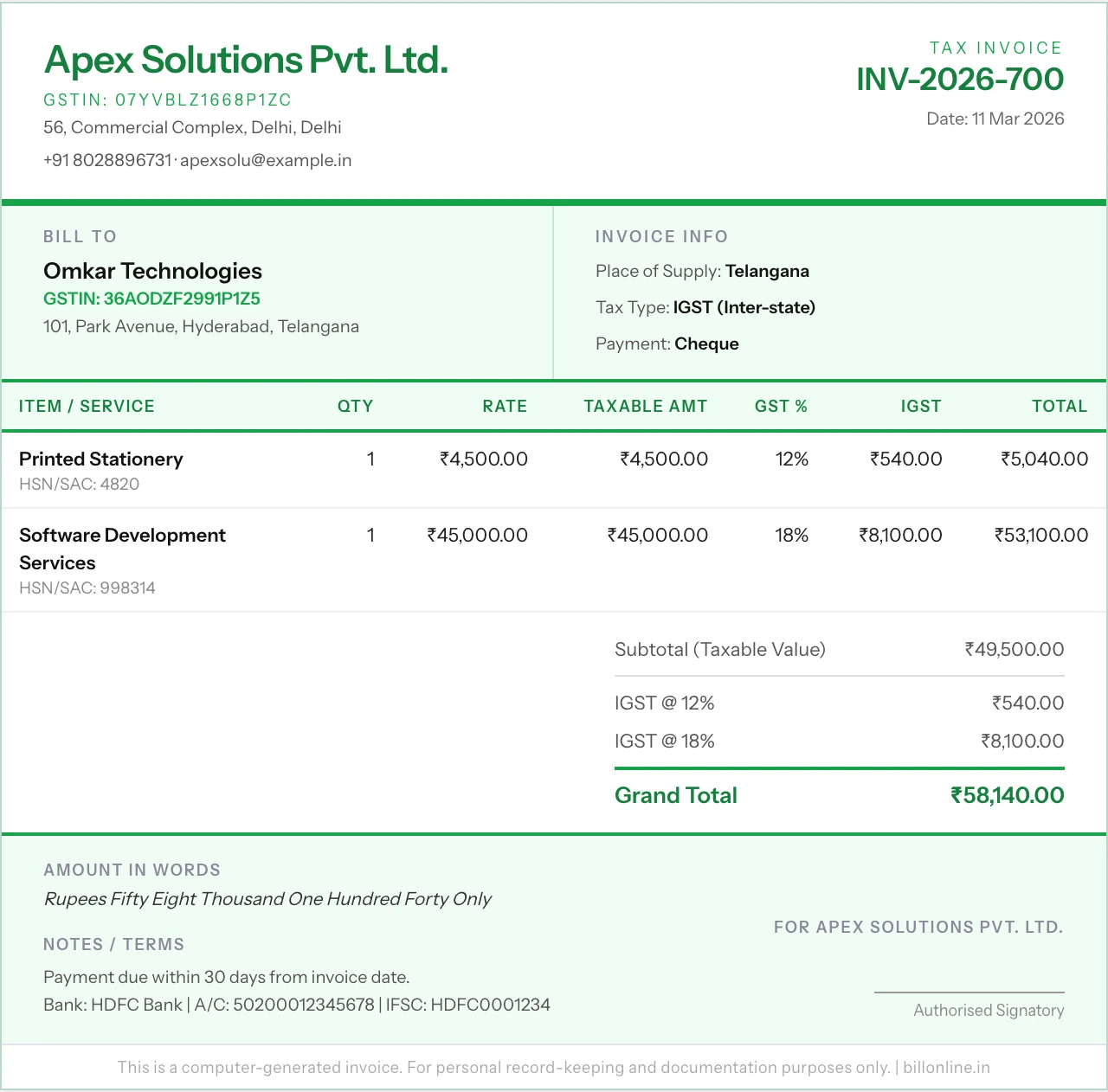
Keywords like Word, PDF, Excel, format, download, reimbursement, and invoice keep drawing searches because users are solving real operational problems. They need a document that is not only presentable, but also believable, traceable, and easy for another person to approve. That is why on-page explanation matters almost as much as the template itself.
Frequently Asked Questions
What is the most important part of a GST invoice format?
The most important part is that the invoice clearly identifies the parties, the tax treatment, the taxable value, and the total amount.
Should I create the invoice in Word, Excel, or PDF?
Many businesses prepare the invoice in an editable format and then share the final version as PDF.
Why do clients reject GST invoices?
Rejections usually happen because of missing GSTIN, unclear place of supply, wrong tax breakup, or weak invoice numbering.