Learn how a restaurant bill format in Excel can be used to prepare itemised food invoices with quantities, rates, GST, and totals. This search intent usually comes from travelling employees, reimbursement teams, and food businesses who are not looking for theory alone. They want a document that works in an actual Indian workflow where the bill needs to explain what was consumed and how the total was reached.
Where Excel is actually useful
Excel-focused searches usually come from users who want editable rows, formulas, or repeatable monthly records. Excel works well where the same document is recreated every month and the user wants structured columns or auto-calculated totals. Compared with Word, Excel is more useful when rows, formulas, or monthly repetition matter.
What the document should make obvious in the first few seconds
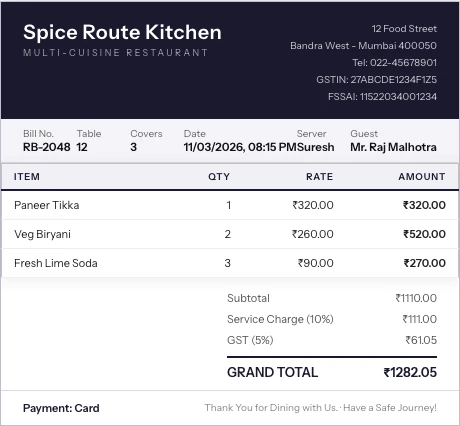
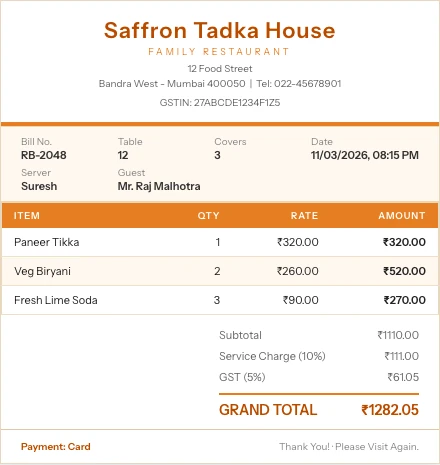
Reimbursement reviewers normally scan the bill date, outlet name, itemisation, and total first. That is why the strongest versions of Restaurant Bill Format in Excel for Cafes and Hotels front-load the most useful information instead of hiding it in dense formatting.
- Outlet details
- Date and bill number
- Food or beverage item lines
- Tax or service charge breakup
- Grand total and payment mode
How this page differs from a generic template
A generic template tells you where to place text. A stronger page for this keyword explains why certain fields matter, what the reviewer is likely to scan first, and how the final document will be used in travel reimbursement and food billing records. That extra context is what makes the format more practical, not just more polished.
For example, a hotel lunch bill used for a TA-DA claim should show the outlet name, date, ordered items, taxes, and final amount rather than only a handwritten total.
Where users usually go wrong with this variation
The usual problem is leaving spreadsheet-style clutter in the final version instead of exporting a cleaner printable format. In many cases the problem is not the file type itself. The problem is that the format stops short of becoming review-ready. A document can be editable, downloadable, or printable and still be weak if the names, dates, period, totals, or identifiers are unclear.
How to make the final output more review-ready
- Set the correct names, period, and identifying details before worrying about design.
- Keep numeric fields readable and easy to cross-check at a glance.
- Export or print the final version only after the working draft is complete.
- Match the output to the real workflow: HR, tax, reimbursement, client billing, or record-keeping.
Create a cleaner restaurant document online and export a version that is easier to review, print, and store.
Open Restaurant Bill Generator →Why this keyword still has search demand
Keywords like Word, PDF, Excel, format, download, reimbursement, and invoice keep drawing searches because users are solving real operational problems. They need a document that is not only presentable, but also believable, traceable, and easy for another person to approve. That is why on-page explanation matters almost as much as the template itself.
Frequently Asked Questions
What should a restaurant bill make clear first?
It should immediately show the outlet, bill date, item list, and final amount.
Why is itemisation better than a single total?
Itemisation helps reimbursement teams understand what was billed and how the total was calculated.
Is PDF useful for restaurant bills?
Yes. A clean PDF is easier to store, print, and attach to expense reports than an unclear image.