Need a rent receipt format download option? This guide explains what to check before using any printable or editable rent receipt template. This search intent usually comes from employees, landlords, and payroll teams who are not looking for theory alone. They want a document that works in an actual Indian workflow where the receipt has to look simple but still survive HRA review.
What a good downloadable template should solve
Download-focused searches are usually driven by urgency: the user wants something ready right now. This intent performs because templates reduce effort when the user already knows the kind of document needed. Compared with learning-oriented articles, download-focused users are trying to move directly into execution.
What the document should make obvious in the first few seconds
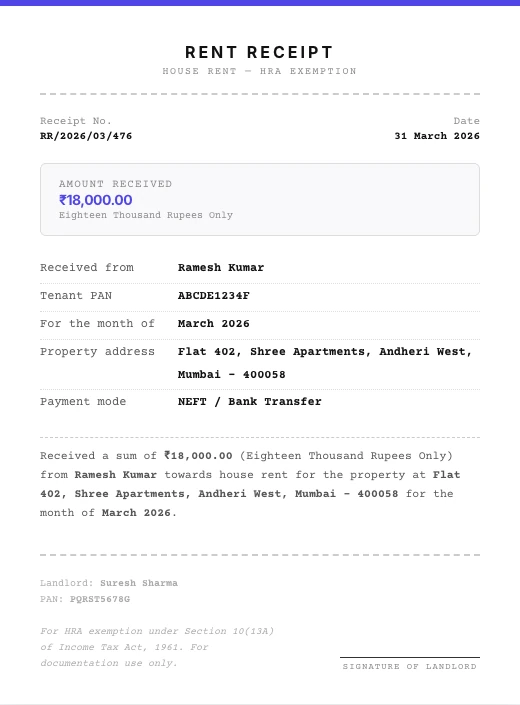
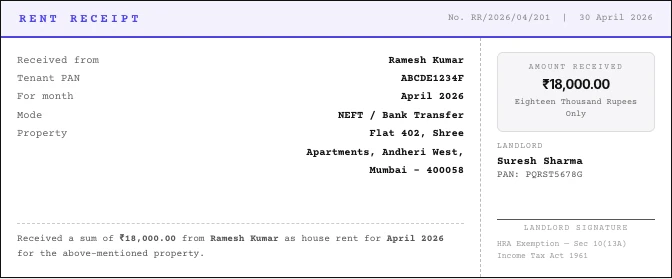
Payroll or tax teams usually check the rent period first and then scan the amount and signature block. That is why the strongest versions of Rent Receipt Format Download Guide for India front-load the most useful information instead of hiding it in dense formatting.
- Landlord name and tenant name
- Rental property address
- Month covered by the receipt
- Rent amount and payment date
- Signature and any tax-related field if needed
How this page differs from a generic template
A generic template tells you where to place text. A stronger page for this keyword explains why certain fields matter, what the reviewer is likely to scan first, and how the final document will be used in salary proof and HRA documentation. That extra context is what makes the format more practical, not just more polished.
For example, if monthly rent is ₹18,000 and the employer asks for April to March proof, each monthly receipt should carry the exact month name instead of a generic yearly note.
Where users usually go wrong with this variation
The usual issue is downloading a template without checking whether it suits the Indian workflow or the approval context. In many cases the problem is not the file type itself. The problem is that the format stops short of becoming review-ready. A document can be editable, downloadable, or printable and still be weak if the names, dates, period, totals, or identifiers are unclear.
How to make the final output more review-ready
- Set the correct names, period, and identifying details before worrying about design.
- Keep numeric fields readable and easy to cross-check at a glance.
- Export or print the final version only after the working draft is complete.
- Match the output to the real workflow: HR, tax, reimbursement, client billing, or record-keeping.
Create a cleaner rent document online and export a version that is easier to review, print, and store.
Open Rent Receipt Generator →Why this keyword still has search demand
Keywords like Word, PDF, Excel, format, download, reimbursement, and invoice keep drawing searches because users are solving real operational problems. They need a document that is not only presentable, but also believable, traceable, and easy for another person to approve. That is why on-page explanation matters almost as much as the template itself.
Frequently Asked Questions
Can a rent receipt in this format be used for HRA?
Usually yes, if the receipt clearly shows landlord details, tenant details, address, period, amount, and the required supporting fields for your employer.
Is Word, PDF, or Excel best for rent receipts?
Editable formats are better while preparing the receipt, but PDF is usually stronger for the final signed version.
What makes a rent receipt look incomplete?
Missing month, missing address, unclear amount, or missing landlord acknowledgement are the most common problems.